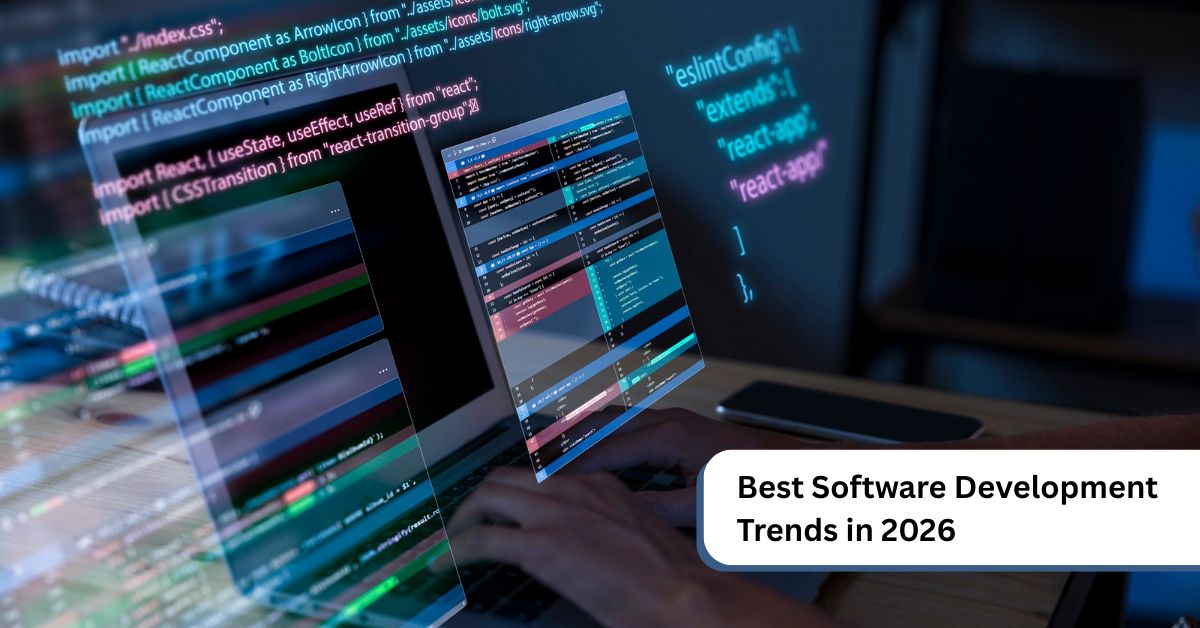
Best Software Development Trends in 2026
Software development is changing very fast. Every year, new technologies, tools, and methods are introduced to make software faster, smarter, and more secure. In 2026, businesses and developers are focusing on building high-quality applications that are user-friendly, scalable, and future-ready.
This blog explains the best software development trends in 2026. It helps you understand what is trending, why it matters, and how it can benefit businesses and developers.
Artificial Intelligence in Software Development
Artificial Intelligence (AI) is one of the most important trends in 2026. It is being used in almost every part of software development. From writing code to testing and debugging, AI tools are making the process faster and more efficient.
Developers are using AI-powered coding assistants to write clean and optimized code. These tools can suggest code improvements, detect errors, and even generate complete functions. This reduces development time and increases productivity.
AI is also helping in decision-making. It can analyze large amounts of data and provide insights that help developers build better applications. Businesses are using AI to create smart applications like chatbots, recommendation systems, and automation tools.
Low-Code and No-Code Development
Low-code and no-code platforms are becoming very popular in 2026. These platforms allow users to create applications without deep programming knowledge.
With simple drag-and-drop features, businesses can build websites, apps, and internal tools quickly. This reduces the need for large development teams and saves time and cost.
Even professional developers are using low-code platforms to speed up their work. They can focus on complex tasks while basic features are handled by these platforms.
This trend is helping startups and small businesses build digital solutions without heavy investment.

Cloud-Native Development
Cloud-native development is another major trend. Instead of building software for a single system, developers are creating applications that run on cloud platforms.
These applications are designed to be flexible, scalable, and easy to manage. Businesses can handle large traffic without performance issues.
Cloud-native development uses technologies like containers and microservices. These allow developers to update specific parts of an application without affecting the whole system.
This approach improves performance, reduces downtime, and makes software more reliable.
Cybersecurity Focus in Development
Security is becoming more important than ever. With increasing cyber threats, developers are focusing on building secure applications from the start.
In 2026, security is not added later. It is included in every stage of development. This approach is called “secure by design.”
Developers are using advanced tools to detect vulnerabilities and fix them before launching the software. Encryption, secure coding practices, and regular testing are becoming standard.
Businesses are investing more in cybersecurity to protect user data and maintain trust.
DevOps and Automation
DevOps is a method that combines development and operations teams. It helps in faster delivery of software with better quality.
In 2026, DevOps is supported by automation tools. These tools automate testing, deployment, and monitoring.
Automation reduces manual work and human errors. Developers can release updates quickly and fix issues faster.
Continuous Integration and Continuous Deployment (CI/CD) pipelines are widely used. They ensure that new features are tested and delivered smoothly.
Internet of Things (IoT) Development
IoT is growing rapidly. It connects devices like smart homes, wearables, and industrial machines to the internet.
Software developers are creating applications that can manage and control these devices. In 2026, IoT is used in healthcare, agriculture, manufacturing, and smart cities.
Developers need to focus on real-time data processing, security, and connectivity while building IoT solutions.
This trend is creating new opportunities for innovation and automation.
Blockchain Technology in Software
Blockchain is not limited to cryptocurrency. In 2026, it is used in many industries like finance, healthcare, and supply chain.
It provides a secure and transparent way to store data. Every transaction is recorded and cannot be changed easily.
Developers are using blockchain to build secure applications like digital payments, identity verification, and smart contracts.
This technology is helping businesses improve trust and reduce fraud.
Progressive Web Applications (PWAs)
Progressive Web Applications are becoming popular because they offer the experience of mobile apps with the simplicity of websites.
PWAs load faster, work offline, and do not require installation from app stores. Users can access them directly through a browser.
Developers prefer PWAs because they are cost-effective and easy to maintain. Businesses can reach more users without building separate apps for different platforms.

Cross-Platform Development
Cross-platform development allows developers to build one application that works on multiple platforms like Android, iOS, and web.
In 2026, this approach is widely used to save time and cost. Developers write code once and use it across different devices.
This trend helps businesses launch their products faster and reach a wider audience.
Data-Driven Development
Data is playing a key role in software development. Developers are using data to understand user behavior and improve applications.
In 2026, data-driven development helps in creating personalized user experiences. Applications can suggest content, products, or features based on user preferences.
Analytics tools are used to track performance and make better decisions. This improves user satisfaction and business growth.
Edge Computing
Edge computing is a growing trend in 2026. It processes data closer to the user instead of sending it to a central server.
This reduces latency and improves performance. It is useful for applications that need real-time responses like gaming, IoT, and autonomous systems.
Developers are building applications that can run efficiently on edge devices.
Software Development Trends Overview Table
| Trend | Main Benefit | Use Case Example |
|---|---|---|
| Artificial Intelligence | Faster development and automation | Chatbots, smart apps |
| Low-Code/No-Code | Easy and quick development | Business tools, websites |
| Cloud-Native Development | Scalability and flexibility | SaaS platforms |
| Cybersecurity | Data protection and trust | Secure apps |
| DevOps & Automation | Faster delivery and fewer errors | CI/CD pipelines |
| IoT Development | Device connectivity | Smart homes, industries |
| Blockchain | Secure and transparent transactions | Digital payments |
| Progressive Web Apps | Fast and accessible apps | E-commerce websites |
| Cross-Platform Development | Single code for multiple platforms | Mobile apps |
| Data-Driven Development | Better user experience | Recommendation systems |
| Edge Computing | Low latency and real-time processing | Gaming, IoT |
Conclusion
The software development industry in 2026 is focused on speed, security, and smart solutions. Technologies like AI, cloud computing, and automation are changing how software is built and used.
Businesses that follow these trends can stay competitive and deliver better products. Developers who learn and adapt to these trends can improve their skills and grow their careers.
Understanding these trends is important for anyone involved in software development. It helps in making better decisions and building future-ready applications.